

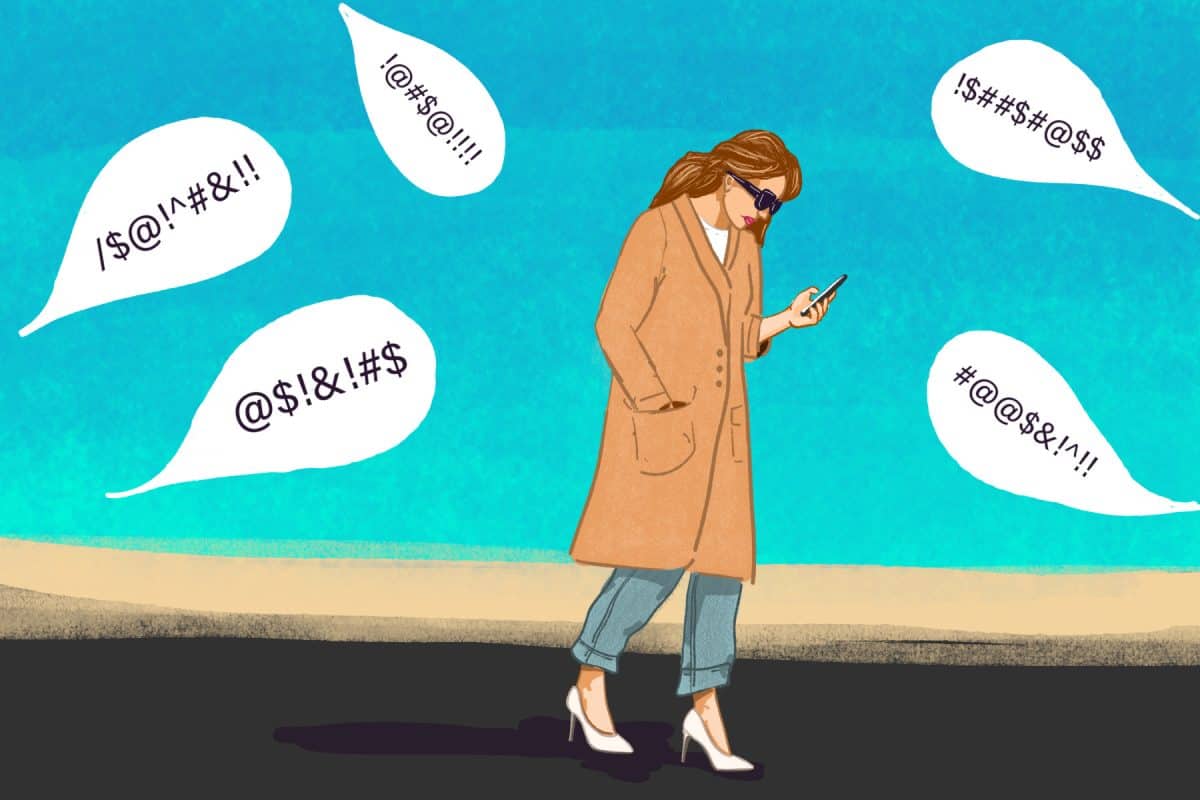
It’s a warm February day and I’m walking down University Boulevard to or from class. The sky is blue, not a cloud to be seen, and the birds chirp happily in the air. Maybe there’s a light breeze blowing too. Suddenly this peace is disturbed when a whistle sounds. It echoes from the lips of a man leaning out of the rear window of a car his friend is driving — also a man. A smirk crosses his face as he notices he’s drawn attention. His friend honks the horn twice, Beep Beep.
Some variation of this situation has happened to me three times since early February. Some details are changed, but it is always on University and always by a man surrounded by his friends.
The Maryland Coalition Against Sexual Assault estimates that over 80% of women have experienced catcalling on their college campus, while only 43% of men have. This compares to Stop Street Harassment estimated 65% of all U.S. women who have experienced catcalling versus a much smaller 8% of men.
On campus, especially from the side of a vehicle surrounded by their friends, men feel a sense of impunity. From the side of a car, it is difficult for a pedestrian to pinpoint exactly what their catcaller’s face looked like, especially when there are multiple people in the vehicle. And even if you can identify the make and model of the car, that is usually not exactly descriptive enough for any punishment to befall the perpetrators.
And that is just the thing. Catcalling goes unpunished the vast majority of the time. While under Alabama law catcalling is not specifically illegal, it does become an infringement on the law when it crosses the line into verbal harassment. So, per this law, a whistle would not necessarily count, but voicing a threat would.
Catcalling is not only a safety issue, but can cause women to experience anxiety, body image issues and vulnerability. When catcalling becomes repetitive, women feel unsafe and unsettled — and when this happens on a college campus it is causing them to feel this in their own home.
It is not only a safety and mental health concern, but a practical one as well. When asked about their reaction to catcalling in the same location, a study from Brigham Young University reveals over 80 percent of women studied said they choose a different, frequently longer, route to get to their destination in the hopes it will not occur again. Some women even cancel plans for fear of being harassed on the way to or from.
Catcalling is one of the most common and unpunished forms of harassment that women experience. Women feel unsafe and anxious while men feel protected against punishment and immune to the effects of their actions.
The University should take action to attempt to decrease the amount of cat-calling that happens on campus and increase punishment for these actions.