

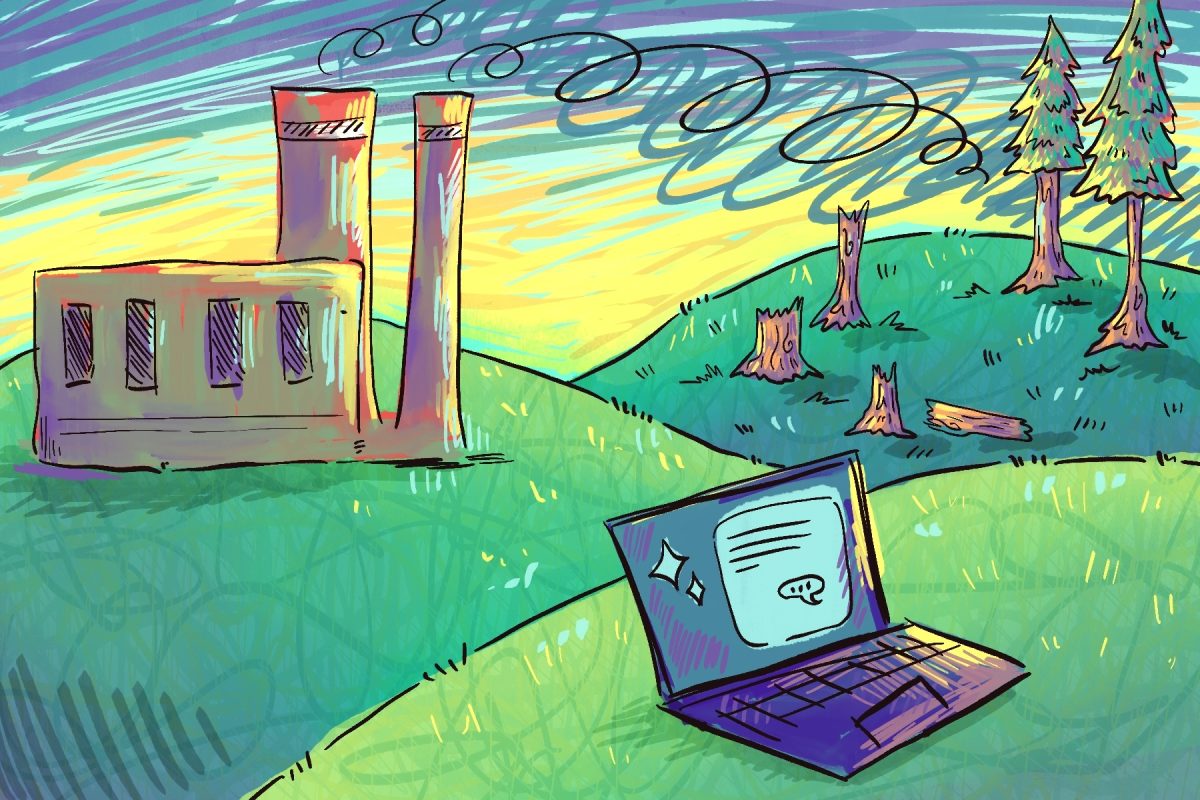
Maybe this is just personal preference, but noise pollution, water depletion and high electricity bills are not things that I want to be surrounded by. Unsurprisingly, these unsavory symptoms are all indicators of a community plagued by an AI data center.
In what seems to be a race to establish a monopoly over the growing artificial intelligence world, it seems that companies are disregarding the potential consequences of their creations in an effort to establish their place in the market. As citizens, it is imperative that we reflect on what this plethora of data centers means for not only the state of Alabama but our nation as a whole.
The city of Cullman, Alabama is already moving to make their concerns loud and clear. Cullman is one of many cities wary of what the construction of one of these data centers could do to their local environment and economy. The Cullman City Council is currently deliberating on instituting a one-year moratorium, a year-long delay to study the potential effects of these centers and a safer path moving forward.
Cullman is not alone, with the Leeds City Council moving forward to establish their moratorium on data centers on June 8 and Homewood voting this past Monday to temporarily shut down any data centers larger than one megawatt. The people of Alabama are making their stance on these AI data centers known.
However, this distaste for AI is not just a trend in Alabama, with 71% of Americans saying they somewhat or strongly oppose the construction of AI datacenters in their area. It is blatantly obvious that the general public is distrustful and disinterested in what they have to offer.
The two biggest concerns posed by the public are the effects on resources and lessened quality of life.
A medium-sized data center alone can use up to 110 million gallons of fresh water a year, with data centers on the bigger side being able to use 5 million gallons a day to keep the centers cool enough to work reliably. Considering that only 3% of the Earth’s water is freshwater, and an even smaller percentage is safe enough to be used for consumption, these data centers don’t seem to have a lot going for them in terms of sustainability
When we stop to consider all of the harmful things AI and its data centers have to contribute, the question becomes simple: what does AI give us that outweighs its consequences?
There’s no doubt that the most fascinating and compelling trait of AI is that it offers a type of convenience we have never seen before. With AI, there is no need to write your own emails, create your own artwork or even sift through Google search results — it will do it all for you.
This convenience is a curse that we, as college students, are all too familiar with. With either complete AI bans in certain classes or encouragement to use these programs in others, we find ourselves struggling with remaining authentic or pursuing the convenience that everyone else seems to be enjoying.
However, with this increased convenience comes increased laziness and an inability to carry out even the most basic of tasks. Not to mention the adverse effects that increased interaction and parasocial relationships with this artificial intelligence could mean for this generation’s social skills and their ability to think critically.
The mere existence of AI breeds disingenuousness. Why do anything if AI will do it for you?
As we inevitably continue on this ravenous path in pursuing AI development, we must remain cautious, diligent and responsible — if we don’t work to regulate AI and its harmful data centers, the results will be disastrous.
We must ask ourselves if we, as a society, are okay with sacrificing our environment and the quality of our own lives for a little extra convenience. The citizens of Leeds, Homewood and Cullman are not, and maybe the rest of Alabama and the United States should follow suit.


