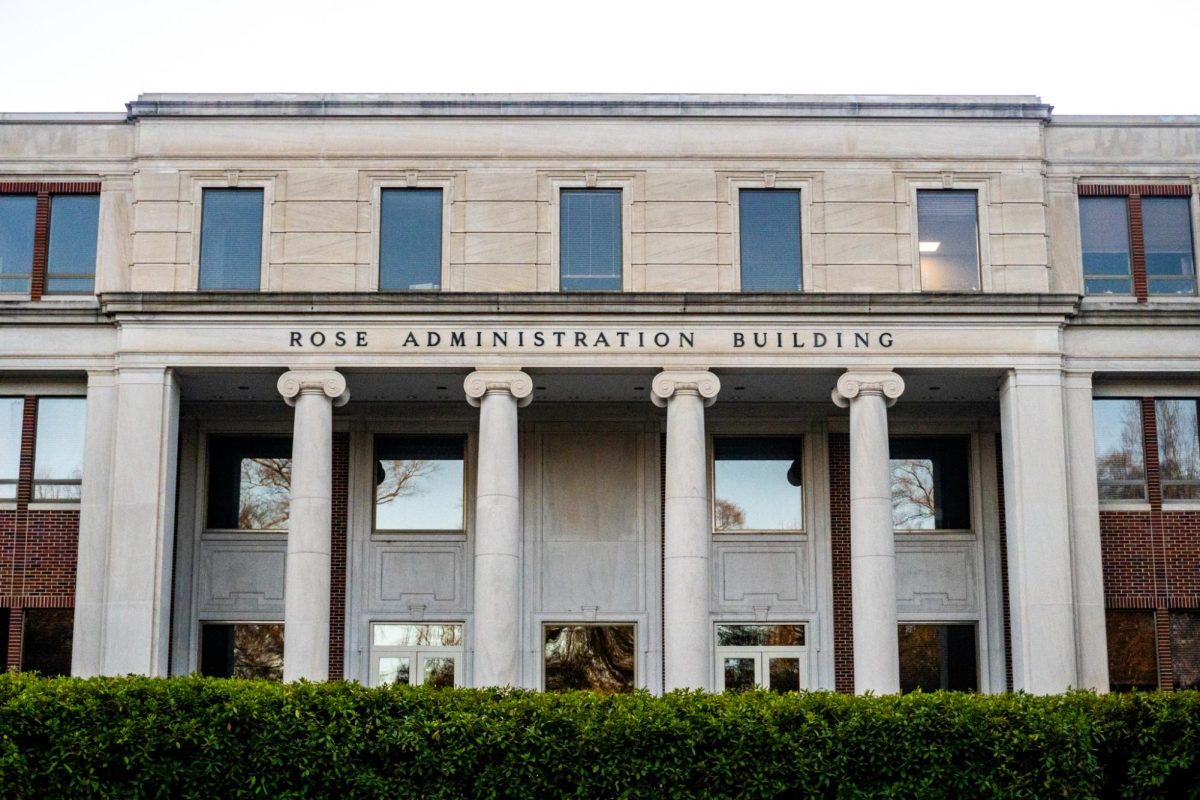

The Black Faculty and Staff Association announced on Feb. 26 that Black Scholars Day, a day recognizing the achievements of Black UA students, has been renamed to “Harold Bishop Honors Day.” The email invitation, previously exclusive to Black students who qualify, has been opened to all University students.
Harold Bishop was one of the first Black faculty members at the University. He worked in the College of Education from 1974 until his death in 2005. Freshman, sophomore and junior students with a 4.0 GPA received an email invitation from BFSA to attend the event on March 29. Seniors with a 3.5 GPA were also invited.
“I am very happy with the fact that we are honoring another Black faculty and staff member,” said Earl Jones, a senior majoring in computer science. “But what overall sucks is just the fact that it feels like we can’t have something to ourselves.”
Alex House, a University spokesperson, deferred to BFSA leadership for comment.
“Employee affinity groups, while serving a valuable role for their members, are not official university groups,” House said.
It remains unclear why the event was renamed. BFSA did not respond to multiple requests for comment.
The change comes as the University has ended programs for identity-based groups in the wake of state legislation and new federal guidance from the Trump administration that have targeted diversity, equity and inclusion programs.
The Black Student Union office was removed from the Student Center in August 2024 after Senate Bill 129, which banned state sponsorship of DEI programs, was enacted in March 2024. The law also spurred the replacement of the University’s DEI office and the Student Government Association’s DEI Passport program, among other changes around campus.
The University shut down two student-run magazines, Alice and Nineteen Fifty-Six, in December 2025, citing a federal memo issued by U.S. Attorney General Pam Bondi in July. The publications were aimed towards women and Black students, respectively.
Ayinde Tor, a senior majoring in public health, said that he wasn’t bothered by the name change at face value, but believes taking “Black” out of the title and inviting all students who meet the requirements to attend diminishes the point of the event.
“It’s taking the spotlight away from the Black people who earned the right to be able to go to this event,” he said. “It’s catered to Black students and Black scholars. So everybody getting the invite, it’s not right.”
Madison Brainerd, a senior majoring in news media, said she will not attend the event because she doesn’t want to take away from Black students being acknowledged for their achievements.
“This is for an event recognizing students who have excelled tremendously in their academics… because they are underrepresented, and they do deserve to have their own day,” she said. “There’s honors days for other events and other things that honors everybody. Why can’t they just have this one thing?”
Jones said he believes the inclusion of all students sets precedent to erase the efforts of the University’s Black community.
“I feel like it is a dangerous breeding ground to start washing away the true meaning behind Black honors day,” he said.