

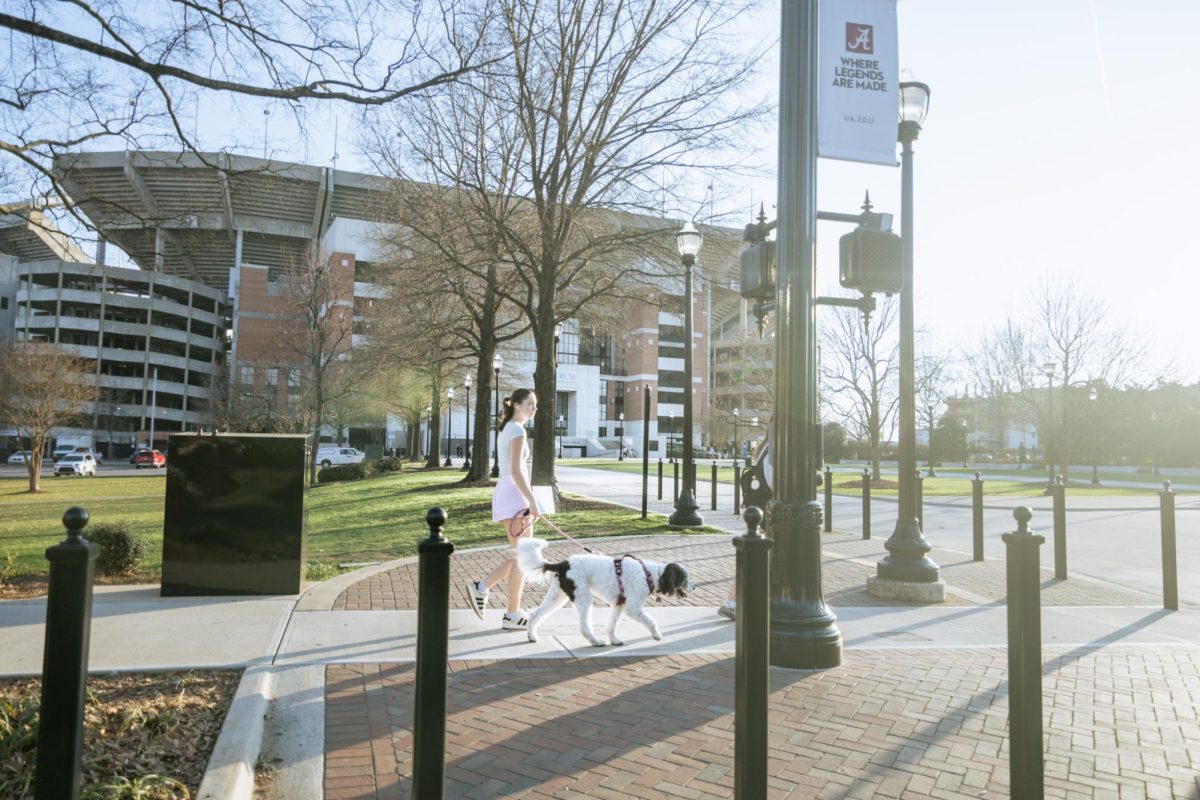
This past winter, I found my sleep disturbed by a whining, pained noise outside of my window. It was constant, both in the early morning and at dusk. Upon investigating, the culprit eventually revealed himself: a white-and-black tomcat yowling as he marked his territory, which happened to be right outside of my apartment. My first thought: College students need to change their mindset around pets.
Dozens of stray cats skulk around Tuscaloosa, primarily found in apartment complexes, where scraps of food are easy to access. The sheer amount of kittens I’ve seen would also indicate that these animals were not spayed or neutered before they were turned out. The problem has grown to the point where the local animal shelter has been at or over capacity every year I have been at the University.
The appeal of a pet to college students is not lost on me. College can be stressful, and having a loving, furry friend eagerly greeting you when you come home can make long days just a little bit brighter. Beyond being linked with lower cortisol levels overall, pets in all shapes and sizes benefit their owners.
Walking a dog is good daily exercise for owners and pets alike, boosting our immune systems, improving skeletal and muscular health and leading to increased cognitive function. Owning a cat is also linked with “resiliency against cardiovascular disease,” as they can act as buffers for stress. Even watching a fish swim around in a tank reduces stress and promotes mindfulness.
Pet ownership can teach you to structure your days and provide motivation to those struggling with mental health conditions such as depression, because another living being is dependent on your ability to get out of bed. Animals have routines based around our own, and taking responsibility to meet their needs comes with the added capability of meeting ours.
With stress and isolation worsening health overall, a pet could be seen by many as a golden ticket to a healthier, happier and thus longer life. However, in the words of every sitcom mother: Having a pet is a huge responsibility. One which many college students are not capable of shouldering.
Finances are a key determinant in what kind of pet one can adopt, as well as the quality of that pet’s life. The American Society for the Prevention of Cruelty to Animals estimates the first-year cost of owning a pet to be around $3,221, with the annual cost being around $1,391. This is a cost that a sizable portion of college students are not able to bear.
Adoption fees can cover immunizations, a check-up from the vet and spaying or neutering. According to the Animal Humane Society, the rough estimate for adopting a dog is around $30, while other animals are $10. Fees from breeders are more arbitrary than that, often starting around the $500 range due to the animal’s pedigree, and do not typically include a veterinary visit or spaying or neutering. These can cost upwards of $150 and $400 respectively.
Spaying or neutering is especially crucial to preventing animal shelters — and our streets — from being overrun by cats. Our very own Metro Animal Shelter points out that in a single year, one litter of cats can produce 6,000 kittens. Many shelters offer catch-and-snip programs in which stray cats can be brought in and fixed, or a charity fundraiser such as the Tuscaloosa Spay Neuter Incentive Program’s “Fix Your Ex” event earlier this month.
However, these events only highlight the need for responsible pet ownership in the first place, as these programs and shelters would experience a lot less stress if the cost for neutering or spaying was paid upfront. While preventing strays is not as prevalent an issue for dog owners, spaying or neutering does prevent certain cancers from developing which could threaten the dogs’ life.
Recurring costs for pet food can start at $50 per month, but this food is often nutritionally lacking. With around 59% of dogs and 61% of cats being classified as obese or overweight according to the 2022 Pet Obesity U.S. Prevalence Survey, pet health through quality food and exercise is becoming a more prevalent issue in terms of ownership.
Mental and physical activity is crucial for the wellbeing of animals. Balancing classes, a job and extracurricular activities means your pet will spend the majority of the day at home. This should directly impact the kind of pet one should consider getting. A big dog is not going to live a happy life in an apartment with limited access to the outdoors. A cat should not be confined to a single room.
This article is not to be read as a diatribe against pets, but instead an encouragement to reflect on what getting a pet would really mean for one’s individual situation. While dogs and cats are great, more space and cost efficient pets, like rats or fish, are often better alternatives. If you can’t live without seeing a dog or cat for a while, Metro Animal Shelter’s volunteer and happy hour programs allow you to interact with all different breeds, ages and personalities.