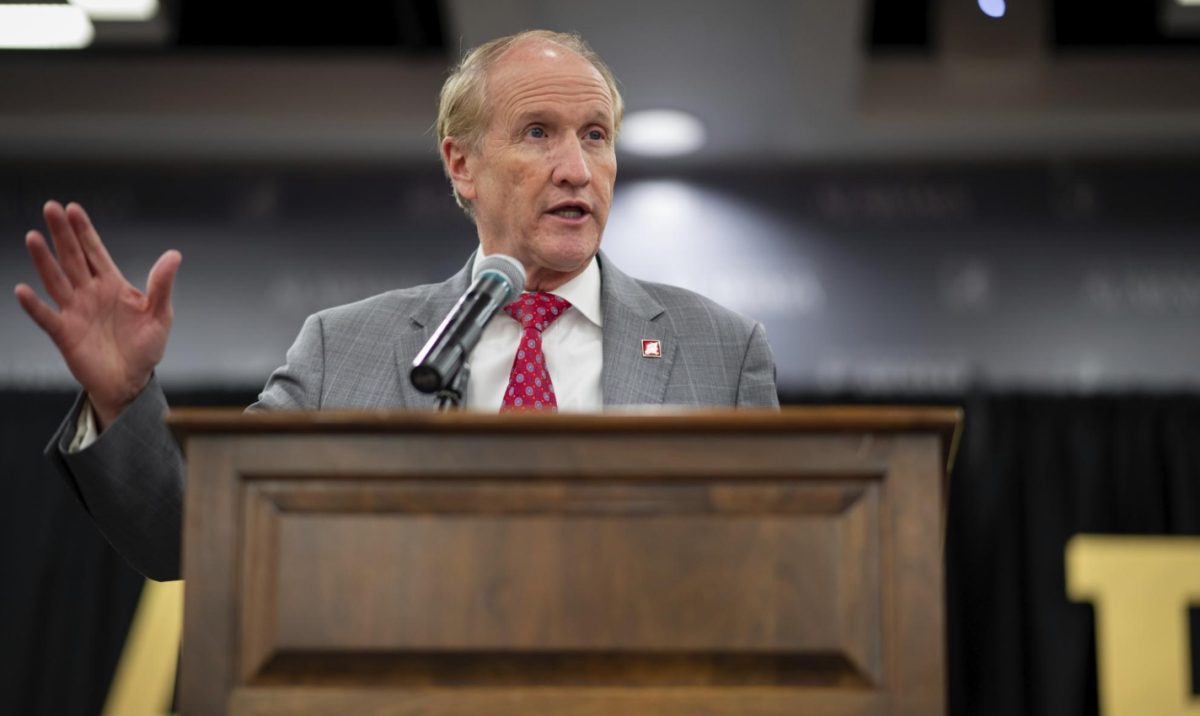


Kyle Porter is a senior majoring in public health. He is running for SGA president.
Q: Why is it that you’re running for president?
A: Thank you for your question. So I am a senior at the University, and I have experienced several different SGA administrations. I’m also a student leader and heavily involved on this campus of the University of Alabama, but yet I’ve never experienced the influence or implications of the SGA itself. The SGA serves an important purpose and obviously influences the lives of students all around our community. But, at least in the communities that I’ve felt and I’ve been a part of, I haven’t really had interactions with them and haven’t felt their influence or mission. The reason I’m running for SGA president is to truly represent the students, the students who have been overlooked by the SGA over the past four years, and who deserve a platform to voice their concerns and to be heard.
Q: Why do you think you are the best candidate for the position?
A: Well it’s easy. It’s because I don’t have SGA experience. Now, you might look at me and say, “Kyle, that doesn’t make any sense.” But it does because I am truly representing the students, because I am a student just like every other person out there. The SGA’s purpose is to be a platform for the students. Students like me and everyone in this room, or just people, and who just want their voices heard. Now, over the past years, like I mentioned, the SGA has overlooked student perspectives and the other candidates that are in question have been part of the SGA, and I believe that they have not prioritized students the way they should. The reason I’m the best choice for this 115th University of Alabama presidential election is because I represent the students, because I am a student just like you.
Q: What are your campaign’s key platforms?
A: [My] key platform is bring the ‘S’ back to the SGA. Bring the student perspectives back to the SGA and promote the things that we truly want and we truly need. For an example, student leaders and student organizations have been overlooked. The SGA is a platform for leadership, but does not serve as the main pillar of leadership. Therefore, they should not make the decisions without incorporating the perspectives and insight of detailed and experienced student perspectives and organizations. Promoting student leaders, promoting student wellness and incorporating students in the legislation and decision making of the SGA is what our platform stands for, and we do that through several different disciplines. But overall, we’re bringing the ‘S’ back to SGA.
Q: What two specific initiatives you want to accomplish, and what time frames do you hope to accomplish them in?
A: Thank you for your question. So building off of exactly what I just said, we want to establish SECs. Funny, right? Or student executive councils representing student organizations in different disciplines. For example, I’m a pre-medical student and we attempted to do this with the pre-health organizations, taking together the presidents and vice presidents of several different student organizations to represent a voice to represent our mission, and to represent what we need in our community.
So, one thing that my campaign and what I would do as your president is represent student organizations through the Student Executive Councils and have their voices heard along with, connected with, the SGA. This can be done soon. This can be done in or year as an administration, and honestly, it can be done in a semester because student organizations and student leaders are waiting to be heard. They want to be heard, and they want their missions spread across campus. Now, a second thing I would do is, well, listen to the students. I’m a broken record, okay? One thing that students have advocated for is personal issues parking, transportation, even their e-scooters have had issues. So one thing that we would instill is answering them, having SGA officers and SGA officials actually go out there and engage with the students.
So, to be specific, focus groups, tabling, forums, opportunities and platforms where you can actually talk to an officer. It is ridiculous that I can connect with someone in the United States Congress probably faster than an SGA officer here at the University, because they’re just not committed to their job, and they haven’t been told that that is their mission.
Now, this is not a criticism of every SGA officer. The SGA is full of wonderful leaders and people who truly want to make an impact, and that’s what it’s all about. But they just haven’t been guided. They need the right mission. They need the right guidance, and with all administration, we will connect the SGA with the people.
Q: How do you plan to adapt if your initial plan for achieving those goals doesn’t go how you hope?
A: One of the biggest tenets of our platform is communication. I have bothered so many pre-medical and pre-healthcare students with emails every single week, and I always use Times New Roman. It’s always absolutely amazing in email. But, communication is critical and not only one sided, but bilateral communication between parties is critical to executing any mission. If those things don’t work, if our student leaders don’t respond to our SEC proposals, if our SGA officers can’t connect with the students, then we analyze, we adapt, and we execute, and those are important. The one thing that SGA has to do, and the one of the tenets of leadership that I’ve learned as an experienced leader here on campus is that you always have to be there, and that’s your job.
Even if no one answers your email, even if no one attends your meetings, you still have to be there and you still have to communicate. Keeping the students informed, keeping the SGA informed, and making sure you have a consistent platform of excellence and execution is how we execute and how we adapt. If the SEC doesn’t work, if these student leaders don’t want to reach out, we communicate with them. We meet them at their level and give them what they need to succeed. Because again, it’s not about us, it’s about them.
Q: What experiences have you had on campus that you believe will help you in the role if elected?
A: That’s a great question. So I am the current president of Alpha Epsilon Delta, or AED, the University of Alabama’s official pre-health honor society. I’m the founder and director of the Spirito Foundation 501c, a national nonprofit honoring my late grandmother, and providing student volunteers to retirement home communities to combat elder loneliness. We have our own chapter here called Tide for Tuscaloosa with over 100 active volunteers that do supply college volunteers to resident homes around Tuscaloosa, and I’m also the student president of the DCH, or Druid City Hospital volunteer program. Now, those are just campus involvements. I also have off campus leadership involvements, but none to be said that that has built me as a leader.
I believe that leaders are born, not created. But, good leaders are not born. It takes experience, it takes failure and it takes persistence to become a good leader, and I have seen all of those things. Failure after failure. I have tried to execute certain missions to become a better leader, but also to become a better person, because that’s what it’s about. So through my experiences over the past four years, through my resume building, through my connections and through every single hand I’ve shaken, it has grown me not into a better applicant, not into a better SGA candidate, but to a better person. And as a better person, I can truly connect with you. I can have a conversation and we can truly execute our collective mission together.
Q: How will you represent all students, even those incredibly different from you?
A: Well, I would like to point out one thing on my resume that might help attribute towards differences within students. Now, first of all, English wasn’t my first language. Spanish was my first language. I grew up in Peru, in the Dominican Republic. My parents were diplomats and it was just a wonderful experience. I also speak Japanese and I interact with tons of international students around campus. Now that is not attributes towards myself, that is attributes towards my emphasis on diversity and my emphasis on truly connecting with people regardless of their differences. Because it’s not the differences that separate us, it’s the differences that pull us together. People usually ask me, “why do you study Japanese?” It has really no relevance in the U.S. other than if you’re interested in Japanese culture, tradition or food, which is great. But what I like to emphasize, it is not Japanese itself that I’m interested in. It’s the connections that Americans and Japanese can build together.
Our differences, like puzzle pieces, put us together. So although that’s a very niche example, it kind of proves the point where I do have an established interest, an established appreciation and love for our diverse perspectives and bringing students together. I’m involved as a pre-medical student, but I also have experiences in the federal government, in non-profits and in other disciplines that will help me bring diverse groups together. I love making jokes. I love making people smile and I love bringing people together. I think an SGA president has to have those attributes, has to have that experience, and has to know that differences pull us together, not apart.
Q: What’s something that isn’t currently a part of your platform that you do you think will benefit the majority of the student body?
A: That’s a good question. I’ve heard a lot about bringing, I guess, different dining opportunities to students. Along with that, raising pay of student workers, certain things that seem quite difficult to manage. Now this is just an overall SGA initiative. I think that raising, dealing with prices and paychecks is a difficult thing. Obviously, not having experienced SGA, I don’t know how the logistics works. I was a student worker myself. I got paid $11 an hour, and that’s okay. But, I know how hard it is to deal with money, especially with people, who see an undergraduate email and kind of look the other way, right? So raising student pay, raising graduate pay, etc. can be difficult, and that’s why I haven’t mentioned it in my platform, because I know I can’t promise that execution. Nothing on my platform is not a promise. Now, everything that I say, I know I can execute. I know my team can execute because we have a drive and a passion to do it, and we know that they are realistic, smart goals. I haven’t put anything on my platform that I even question, not even 1% that I can’t do, and that’s raise student pay and raise graduate pay. There’s no promises there, but that’s something that we’re going to try to do. That’s something that we want to do because who doesn’t like money. But, again, that’s not something that we can promise, and we don’t give empty promises.
I mentioned at the beginning, dining foods. We have mentioned something about bringing non-processed whole foods to the dining hall and making them available at night too. I know that after about 8:30 p.m., the only thing you can eat is burgers and fries, and I’m an American, so I love that. But, we need to promote wellness. We need to promote health, and that is something that we do need to fix. That is explicitly stated on my policy form, so I won’t build on that. But again, fixing pay and giving bigger paychecks is something we want, but not something I can promise to you. Because again, we don’t do empty promises.
Q: Your campaign featured a lot of social media trends and videos. What made you decide to go this route?
A: I have seen the same cut and paste SGA posts over the past four years. People make very nice logos, and again, these people are committed, smart and driven and I admire them for that.
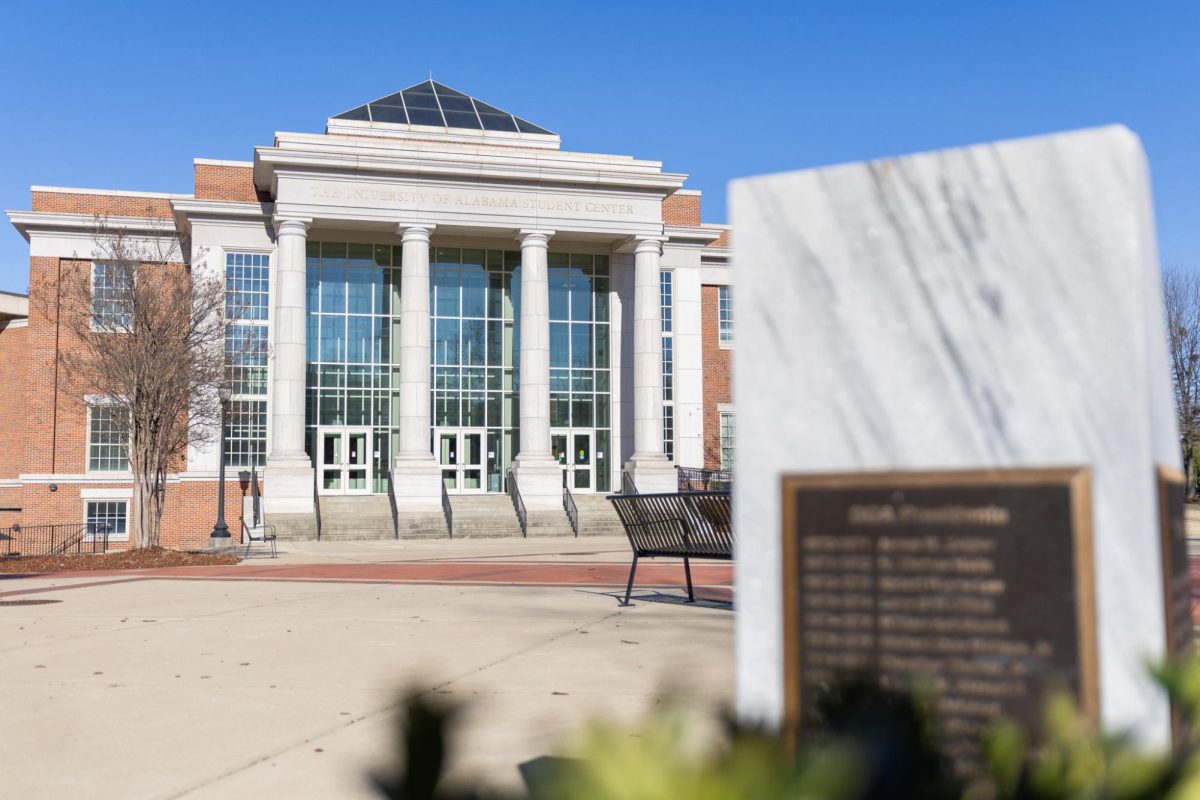
I do not criticize any individual candidate at all, but the SGA as a whole, we do have critiques on them as well of course. Now, we took a nontraditional approach to this because we knew a traditional approach wouldn’t win. We know that over the past four years, it has come and go as the same process. The SGA will elect a, or I mean I guess not the SGA, but there will be a single candidate or uncontested candidates. They’ll win. They’ll have the same exact cut and paste campaigns. That doesn’t grab people’s attentions. Over the past four years, I’ve never heard anyone talk about an election before. Even people I’ve talked to didn’t even know what the issue was. Genuinely, I was tabling one day and I said, “hey, do you want to see change in the SGA,” and they said, “what is the SGA?” That happened twice in the same day. I was bewildered. I didn’t understand. Shouldn’t they be engaging with the students? Shouldn’t they be out there? They shouldn’t hide in the Student Center. They should be with the student body. Now, what makes us different is our campaign. We are not part of the bureaucracy. We are not part of the SGA, but we want to see beneficial changes towards the SGA in the student body. So we took a different approach to it. We have been posting trendy videos on our campaign “meme” Instagram. That is just a calculated approach. We know that people our age like to just scroll and look at short videos, and if one is like that, where it doesn’t have long paragraphs and it has attention grabbing graphics and maybe even some comedy towards it, that’s going to catch their attention more than a long paragraph. We also do have professional policy posts, of course, because we are professionals. This is not a joke and we take this seriously. But at the same time, we want to see change. We think that, well, quite frankly, people have been campaigning quite just blankly kind of routinely, and that’s not what we’re about. We’re about change. We’re not about conforming to how it’s always been.
Q: What’s one last thing you want voters to know about you?
A: Who are you as a person? Does your voice matter? Not as a student. Not as a pre-professional student, but as a human being. Because we both have hearts, we both have brains, and we both have a commitment to our community, and we both want to be heard. Our campaign and me, Kyle Porter, are committed to hearing you. Again, not as a student, not as an SGA officer and not as a voter, but as a human being, because we want to connect. We want to hear you, and we want to bring the “S” back to SGA.