
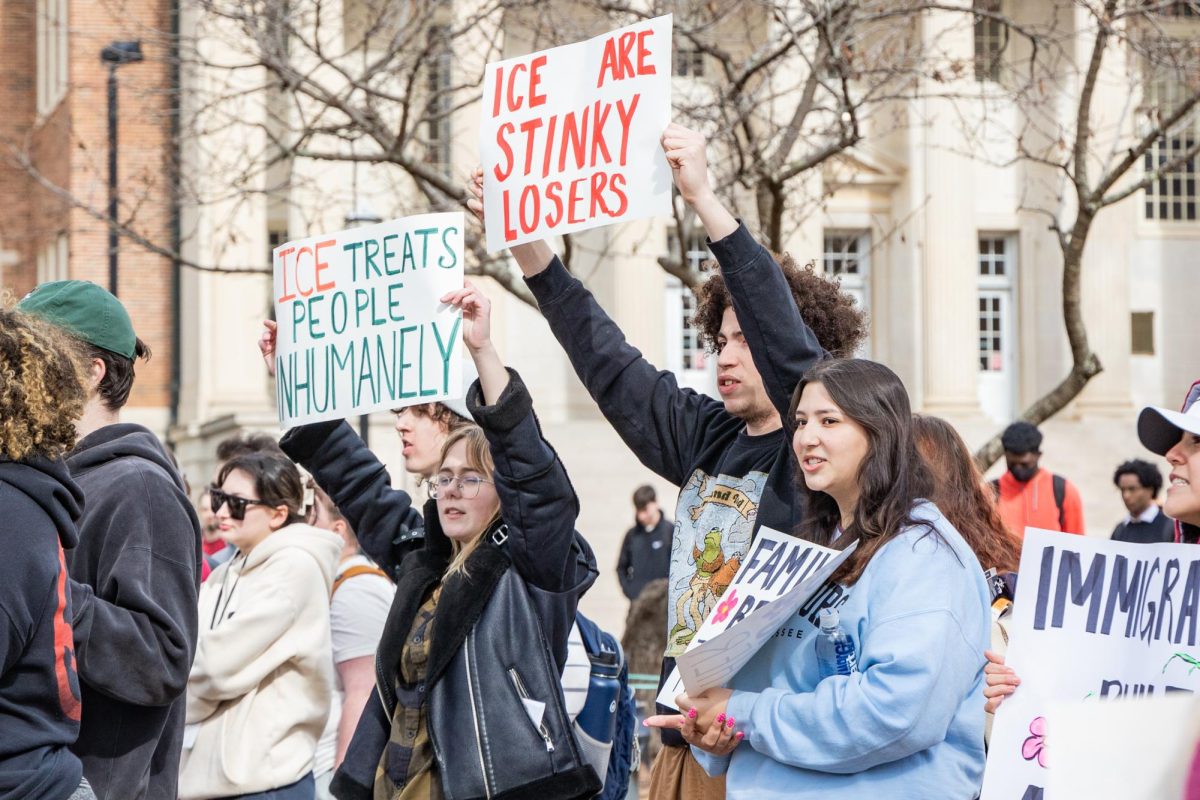
Following the killings of Alex Pretti, Renee Good and others in Minnesota at the hands of federal immigration authorities, economic protests took place across the state on Jan. 23.
Hundreds of businesses closed their doors in protest in an attempt to create an economic blackout. The ICE Out of Minnesota website said that it was time to “demand immediate cessation of ICE actions” in the state.
On Jan. 30, individuals across the country were encouraged to further the movement by participating in a national day-long shutdown — a day of no school, no work and no shopping. The shutdown included walkouts and protests in high schools and colleges in all 50 states.
This approach attempts to speak a language that politicians, lawmakers and big corporations can understand — money.
However, while this form of protest can be effective in theory, there are multiple factors that make these primarily social- media- promoted forms of protest inaccessible to a significant portion of the population.
For some small businesses, especially those on the East Coast that have been plagued with snow and ice storms throughout the beginning of the year, closing for even a day could be enough to sink the ship. While the organizers of National Shutdown Day emphasize that the goal is to halt shopping at big corporations and that individuals should support local businesses for essential purchases, the choice for small businesses to remain open or close their doors can shift consumers’ social perception and assumptions of the business’s stand on the matter.
Seasick Records in Birmingham announced on Instagram that it would not be closing its doors on Jan. 30, but that it would continue to donate 10% of sales, beginning on Jan. 25, to the Hispanic and Immigrant Center of Alabama through Jan. 31.
Additionally, acts of protest that involve abstaining from work and schooling can limit the amount of people able to participate. For students, not attending class for a protest is unlikely to be excused by a professor and could negatively affectimpact grades or progress in a course. Some schools, like James Clemons High School in Madison, Alabama, have even warned students of consequences that would occur for participating in a walkout.
Similarly, missing a day of work could have consequences — alongside missing a day’s salary — such as write-ups or termination. In an already struggling economy plagued by inflation and competitive job markets, the majority of workers cannot afford losing their jobs.
Even for those who condemn the actions of immigration enforcement and unlawful detainments, this form of protest is simply unachievable for many working Americans.
Online advocacy, by contrast, offers a free way to push back against undemocratic immigration enforcement tactics.
While online forms of advocacy are often dismissed as performative, amplifying trusted information is a form of community assistance that can benefit online communities. Delving beyond infographics, many have taken to social platforms to share scripts for calling and writing to local lawmakers to condemn the funding of ICE. Social media platforms can also serve as a medium to share community ICE sightings.
In times when hope feels increasingly fleeting, there are forms of protest whichthat every individual can participate in ways that protect themselves as well.