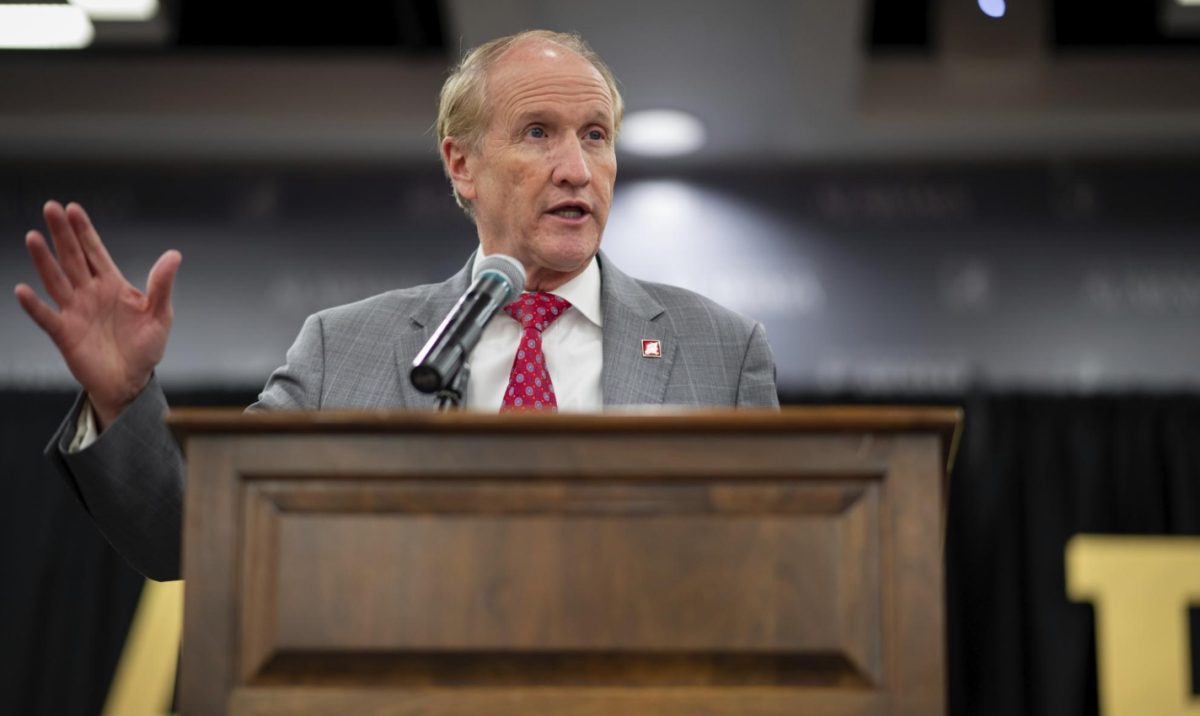


Susan Carvalho, associate provost and dean of The University of Alabama graduate school, announced her plans on Wednesday to retire in summer 2026.
Before joining the University in 2016, Carvalho spent her career at the University of Kentucky as associate provost for internationalization, a Spanish professor and interim dean of the graduate school.
“When I saw the opportunity at Alabama, I knew about the growth that the University had experienced,” she said. “I think that’s known across the SEC, and I wanted to learn more about whether that growth included graduate students and whether my experience could be useful here.”
During Carvalho’s tenure, the University saw a 38% increase in graduate enrollments, according to a UA News release. She said that departments over the past decade have established new master’s and doctoral programs and that “faculty who earn research grants have been able to support graduate growth through those grants.”
“In universities where the undergraduate population is so much larger than the graduate population, it’s beneficial to have someone who’s thinking in all situations about how changes impact graduate students and about how to improve the Graduate School student experience,” she said. “And that’s the main role of a graduate dean, to be at as many tables as possible, making sure that graduate education interests are both protected and advanced.”
Carvalho mentioned some of the Graduate school’s accomplishments she was most proud of during her time at the University were making “processes and information more readily available” to prospective students, current students and faculty, and having “much more robust programs of current student support than we did a decade ago.”
The University also achieved R1 status in the Carnegie Classification of Institutions of Higher Education in 2018 during Carvalho’s tenure, a distinction belonging to schools with the highest levels of research activity.
“When I came, UA was still an R2 institution, and everyone shared the goal of becoming an R1 institution,” she said. “The faculty here all know that graduate education is integral to research growth.”
Carvalho was also involved with the international side of higher education and worked on a project addressing the educational needs of separate regions in Indonesia.
“When I came to The University of Alabama, we were invited to join a project with the University of Utah because of a faculty member who was coming to UA from Utah,” she said. “That project was for higher education development in Pakistan. And my Indonesia experience proved very useful there, and I was able to guide the development of a women’s leadership program as part of that broader project.”
Carvalho said that when looking back at her time at the University, she is impressed with “the spirit of cooperation and trust that exists between the faculty and administration” and that it enabled an “enormous” amount of change to happen over the last decade.
“I hope graduate education continues to thrive and to demonstrate its relevance to our state, to workforce development, to leadership development, and also to national workforce needs and innovation,” she said. “I hope that the Graduate School continues to be seen as a valued partner as the graduate enterprise continues to thrive.”