

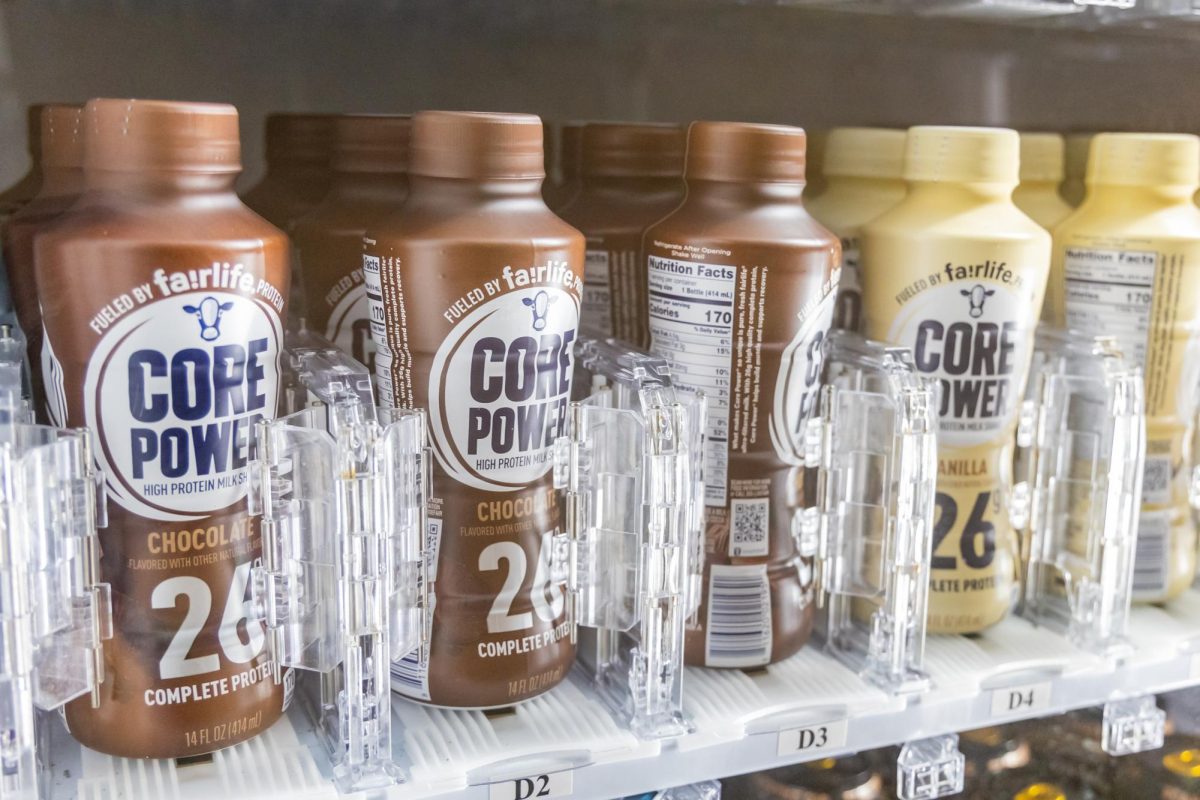
While waiting for class to begin, I notice many of my peers — alongside their laptops and notebooks — unpacking protein shakes from their backpacks. While fueling our bodies for a rigorous college schedule is important, many students are blindly following diet trends that don’t align with their lifestyles.
This recent increase in protein consumption I’ve witnessed on campus has prompted the question: How much protein should we really be consuming? An article from Healthline recommends that the average adult should consume around 50 grams of protein a day, but also prefaces this suggestion with the caveat that this number changes depending on age, sex, activity level and health status.
Considering that most adults in the United States are meeting or exceeding their protein needs and that protein shakes typically contain between 10 and 30 grams of protein each, they may not be necessary for maintaining a healthy diet.
Companies have tapped into this overconsumption and the trend in dieting. The range of protein products offered is vast, and sometimes eccentric. I recently saw an advertisement for protein sparkling water. Products like these with advertisements highlighting their protein contents make people feel like it is an omnirelevant nutrient and you always benefit from more.
Labeling a product as “protein” allows companies to charge considerably more. The protein sparkling water costs $32.90 for a 15-pack, while this 35-pack of regular sparkling water costs $13.61. A popular protein shake, Fairlife, offers 42 grams of protein for $4.88, while a 12 pack of eggs, offering approximately 72 grams of protein total, costs only $2.70. With protein being one of today’s biggest health fads, people should not blindly fall into the trap of thinking anything with labeled high protein is worth budgeting for.
Beyond total grams of protein, it’s also important to consider what are in these items marketed as high protein. Protein powders and foods with added protein may help you hit your protein goals, but they often lack other critical nutrients for healthy living and athletic performance.
Consuming whole foods can provide fiber and micronutrients not present in protein supplements. Common goods such as milk provide calcium and are fortified with vitamin A and D. Lean cuts of chicken, beef and pork are a good way of getting protein alongside minerals like iron and zinc. Beans and lentils provide fiber and folate. Whether your goal is building muscle or living a healthy and active life, balancing these nutrients is essential.
These products can be beneficial to individuals with different lifestyles and dieting habits. For example, plant based protein supplements can assist those adhering to vegan or vegetarian diets to meet their protein goals without consuming meat or animal based products. Additionally, protein shakes and foods are a helpful option for those living highly active lifestyles that require higher than average protein consumption to consume higher levels of protein without drastically increasing calorie consumption.
While these products serve specific consumer bases, college students as a whole are overconsuming them for too high a cost. Trends in dieting should not be followed without understanding what lifestyles they benefit.