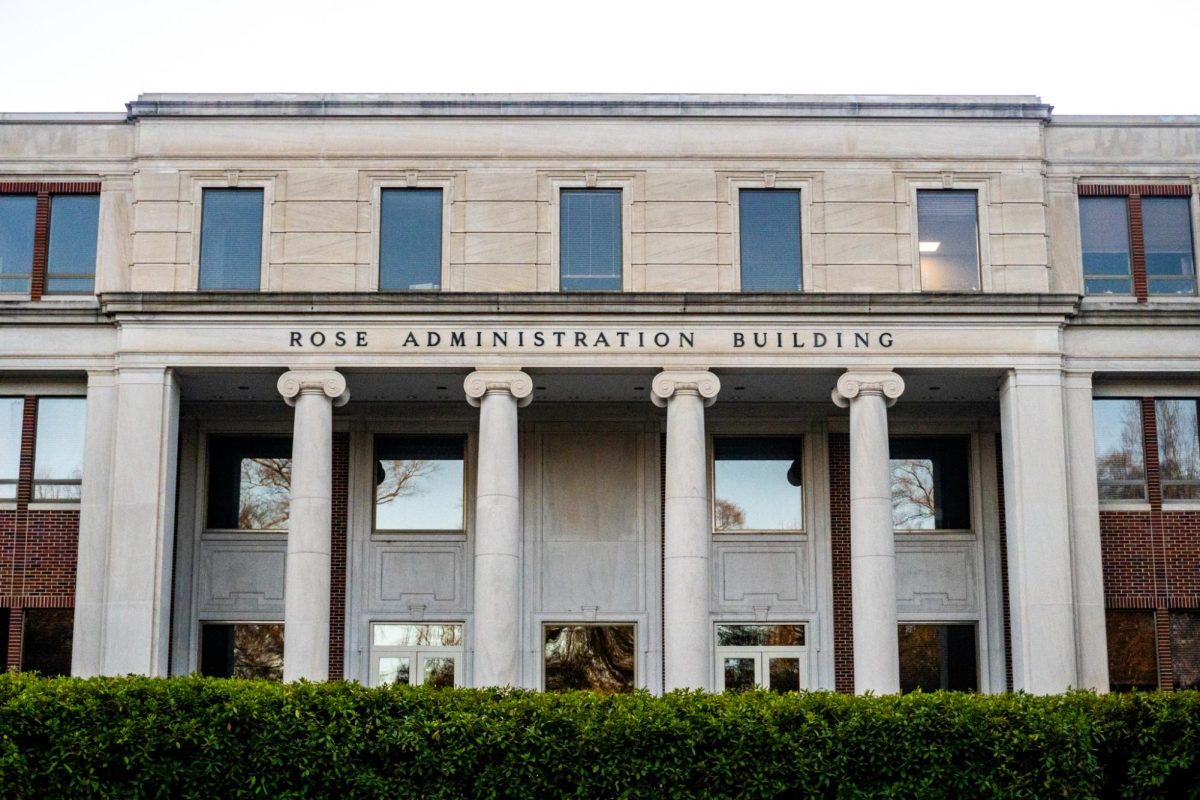


The University will implement its new system for general education this semester for new students.
The new system, “Built by Bama,” takes full effect in the fall 2025 semester, making the class of 2029 the first to come in under the new system. The number of credit hours required for graduation dropped from 53-55 to 37-38 credit hours, depending on the major. The change will allow students to reduce time until graduation.
“This is a huge step forward for the University and our curriculum,” said Ayinde Tor, a junior majoring in biology. “When I was an incoming freshman, I had to take all of these gen ed courses that I didn’t think were really applicable to me or my major.”
He also said that the new curriculum allows students with “multiple interests” to dig deeper because fewer general education courses are required.
“Built by Bama” has been in development since January 2023, after a faculty referendum held in November 2022 supported changing the University’s general education requirements. Over the last three years, aspects of the plan have been integrated, such as the addition of the UA First Year Experience peer program.
“The updated curriculum allows for a coherent, unified core spanning an entire undergraduate education while providing a foundation for all majors and minors,” said Chapman Greer, an associate provost of general education and senior instructor of management.
The world language requirement can now be waived with two years of high school language credits.
Malik Cooper, who graduated in May, said he believes the curriculum changes are neither good nor bad, but that his curriculum also better prepared him for his upper-level classes, as they gave him a good base of general education.
“I was able to take a plethora of general education courses,” he said. “Those classes were very beneficial, and made me a well rounded student and helped me be able to be successful throughout my time at the University.”
Cooper said he felt the new requirements will push students to double major or add minors rather than enroll in more fine arts or literature courses.
Evan Taylor, a junior majoring in operations management, views the change as a move to encourage more Alabama residents to apply due to the reduced credit requirements.
“A lot of Alabama families don’t have a lot of money and don’t go to a very good school, so the chance for them to graduate early and save a huge amount of money might be a bump to the in-state attendance,” he said. “Giving more poor households a chance at college would be great.”
Students must also complete three U.S. and global citizenship credits and three advanced writing credits.
The US and Global citizenship credits are satisfied by any 300 and 400-level courses with an approved focus on cultural and societal issues to prepare students to better participate as a citizen and navigate complex cultures in the U.S. and beyond.
Students can also earn advanced writing credit through 300 and 400-level courses that emphasize academic writing and oral communication. To qualify, each course must include at least one major writing assignment before midterms.
“Built by Bama” also adds two new one credit hour classes, Legends and College 101, which will be mandatory for first-year students and transfers. Together, they aim to better prepare students for life at the University and highlight opportunities on campus. Legends explores different topics from multiple perspectives, while College 101 focuses on teaching new students how to use University resources and the skills to succeed in college life.
“I kind of feel like the introduction classes they have might be a little unnecessary,” said Lenzie Marlow, a junior transfer student majoring in advertising. She said that UA 101 will benefit incoming first-year students, but transfer students would be more inclined to take UA 201 if it was optional.
“When it’s optional, people are more willing to give more time and benefit more from the program,” she said.
New classes aren’t the only additions. The University has also created “Pathways,” a series of courses centered on broad topics or fields and followed by specialized versions of existing courses. The Pathways program will launch with two options: Global Engagement and Executive Systems and Structures.
Global Engagement will focus on international topics and cross-cultural communication, while Executive Systems and Structures will examine how cultural, political and economic frameworks shape societies.
Pathways consist of nine credit hours, divided among social and behavioral sciences/history courses, humanities, literature, fine arts/world language, and courses outside of the foundational core. Choosing a Pathway counts as an alternative to some standard courses instead of adding to total credit requirements.
Completing a Pathway provides graduates with an additional credential on their transcript, a unique graduation cord and access to special Pathways events while enrolled. According to the Office of Academic Affairs website, the University said it plans to expand general education in 2026 with the addition of the Innovation and Creativity Pathway and Digital Literacy and Practice Pathway.
The Office of Academic Affairs is also developing an Experiential Learning program with greater emphasis on hands-on experience, including research, work-based learning, international trips, or direct engagement with the community via schools or volunteer programs. Expectations will vary by major. The program is scheduled to launch in 2026, though details remain limited as it is still in development.