

With a growing population owing to a variety of factors — among them a higher enrollment rate at the University and the football team’s tradition of dominance — the city of Tuscaloosa has seen significant growth in recent years.
A decade ago in 2015, the city’s population stood at 98,332. As of May 2025, Tuscaloosa now has 114,288 inhabitants, a 16.2% increase.
“Our growth isn’t by accident,” Mayor Walt Maddox said in an Instagram post celebrating the increase. “It’s a direct result of our shared commitment to making Tuscaloosa a place where people want to live, work, and raise a family.”
During Saban’s tenure, the University’s enrollment went up by 13,000 students, an increase it had previously taken 41 years to accomplish.
Bolstered by that success, the city attracted fans, gained a strong tourism sector and made more than many places would in a year, raking in $895 million in tourism revenue in 2022. For the permanent citizenry, higher enrollment meant more clientele for the city’s businesses and a greater demand for new establishments.
In the last 10 years alone, a wide array of establishments came to the city, including prominent restaurant chains that cater to students and to Tuscaloosans as a whole.
The year 2015 brought Texas Roadhouse and Chuck E. Cheese. 2016 saw the arrival of the ever-popular Cookout, a “fast food restaurant fit for college students on a budget;” 2018 brought Blaze Pizza; 2021 brought the Louisiana-based Walk-On’s Sports Bistreaux and Thai Basil Sushi II; and 2022 brought Slim Chickens and the Strip’s popular Strange Brew Coffeehouse.
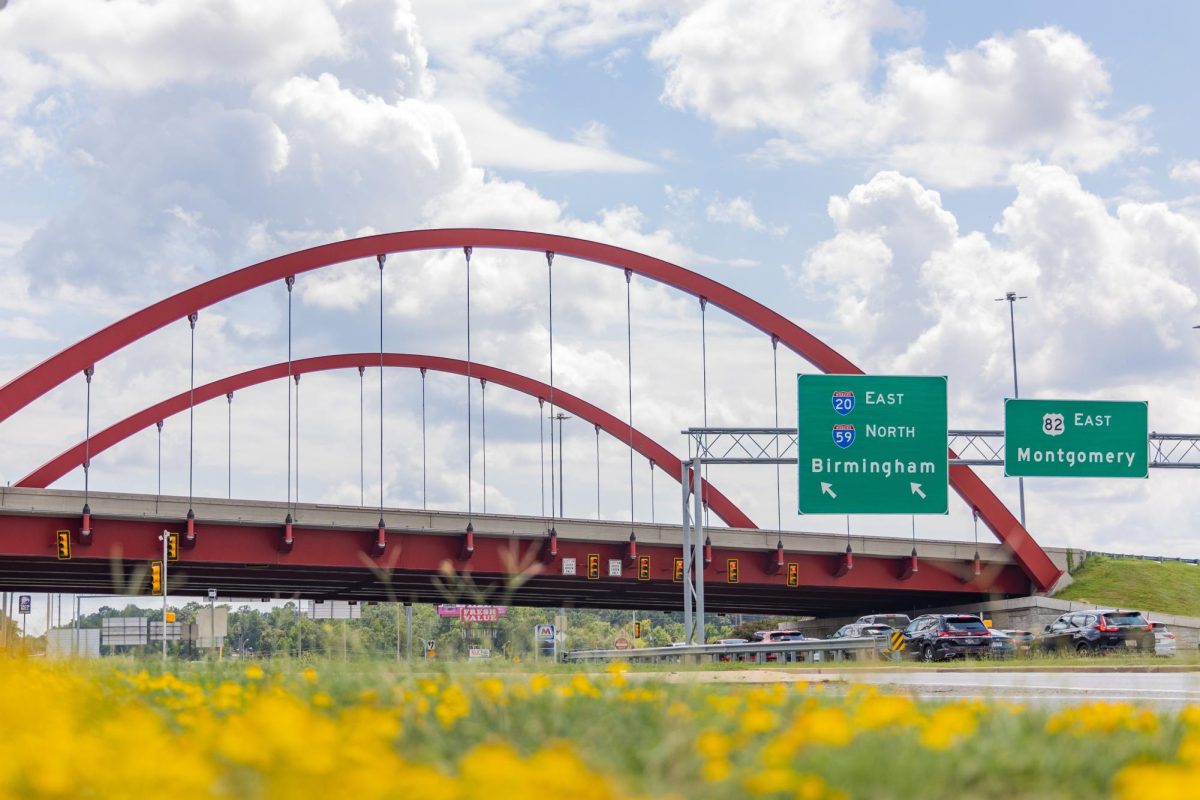
Beyond the food industry, the city has also added several aesthetic and practical attractions. The I-59/20 bridge going over McFarland Boulevard was given arches in 2018, which were painted crimson in 2021. The Second Avenue overpass was finished in 2021, providing a long-wanted connection between 15th Street and the on-campus Second Avenue that houses locations like Coleman Coliseum, Sewell-Thomas Stadium and the UA Law School. The Tuscaloosa Riverwalk, a project beginning in 2003, had its Riverwalk East phase completed in 2017 and its Western Riverwalk phase done in 2024.
The Riverwalk “was a really big addition to life here, to have a beautiful place where you can walk 5 or 6 miles on the water,” said Emily Wittman, a professor in the UA English Department.
Wittman also brought up the topic of demographic diversification, a development that primarily affects the University but can spread to the whole city.
“The big change for me was … now 60% [of students] are out of state,” she said, adding that it’s not just regional out-of-state students, but “people from Cal, Illinois, Virginia.” The University first became majority non-Alabama residents over a decade ago in 2014and that sustained majority with rising enrollment has brought a wide variety of young people to Tuscaloosa.
Whether with population diversity, infrastructural improvements or business expansions, Tuscaloosa is continually growing and doesn’t appear to be slowing down. The University’s success and enlargement has advanced the city’s connectivity and accelerated it on an upward trajectory.