

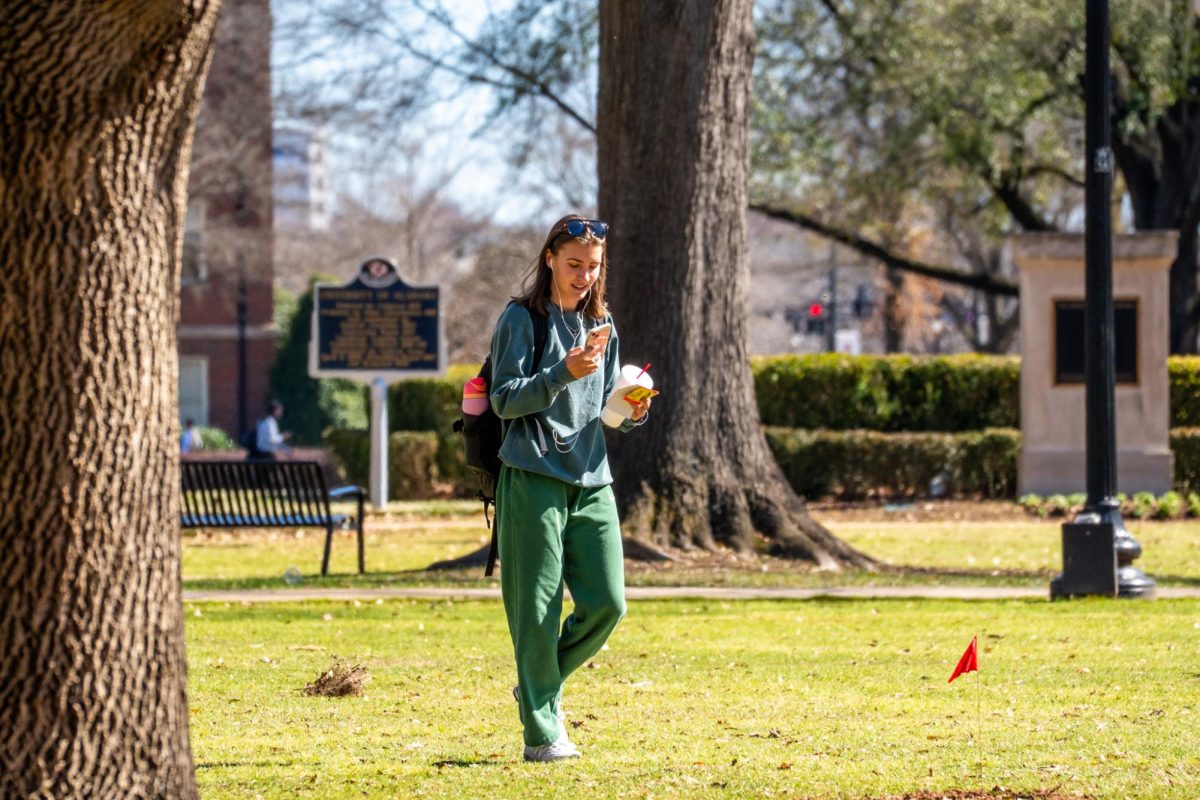
Julia Gonzalez often walks on campus with her favorite songs playing in her headphones, admiring the scenic architecture. Nearby, students study with their favorite caffeinated beverage in the heart of the Quad. Through the lens of movies and social media, the scenery and experience of her walk resemble what many consider to be typical of college life.
Gonzalez, a junior majoring in aerospace engineering, is among students who romanticize college life by shaping their expectations around social media posts and stereotypical portrayals in movies rather than reality.
“I love to go on a cute little walk around campus,” Gonzalez said. “I love a good coffee shop, and I feel like those are kind of smaller ways that I like to romanticize college.”
Thoughts on romanticization vary among students, with some saying that it helps them appreciate their experience, but they ultimately agree that taking it too far can be harmful.
“I think sometimes romanticizing things like academics can be a bit of a motivation to push you to do your best with classes,” said Izzy Woodham, a senior majoring in music production. “Where I think romanticization can be harmful is when you romanticize unrealistic expectations for yourself and start to idolize things so much that things you idolized become toxic.”
Not only do movies such as “Legally Blonde” and “Pitch Perfect” reinforce exaggerated stereotypes that follow students in Greek life and social groups, but they also emphasize the idea of having an extremely active social life in college. While many college students experience frequent social activity in real life, what many movies often get wrong is a lack of balance between the picture-perfect social life and the less glamorous parts of college, such as studying, chores and weekends without plans.
“I definitely believe that movies have unrealistic expectations of college and make it out to be all about partying every night, having your life figured out early on, and it being this perfect experience where nothing goes wrong when it’s not like that,” Woodham said.
Using movie characters to set the standard for one’s college experience can also lead to unrealistic expectations surrounding friendships. While many movies depict lifelong friend groups that withstand four years of school, some students say that isn’t always the case and that it is normal for friendships to fluctuate.
“I will forever be grateful for the first friends I had in college. However, we don’t really talk anymore, because it’s the first people you see in college,” Gonzalez said. “It’s almost like you’re holding on to them ‘til you find a better fit for you.”
Social media is another way college is often romanticized. End-of-semester photo dumps, Greek life content and “day in the life” videos curate the most picturesque parts of college, presenting the experience as flawless and movie-like.
“I think ‘day in my life’ trends are fun to watch and provide a lot of interesting insight into what people experience at different colleges,” said Sofia Balsamo, a junior majoring in management information systems. “However, I do think they can lead viewers to believe that is what a typical day looks like, and it can create unrealistic expectations.”
In moderation, romanticization can fuel feelings of inspiration rather than comparison and resentment. Gonzalez’s campus walks and coffee shop visits, for instance, help her to “see the beauty” the campus provides. Students cherish the many memories they make offscreen, and Balsamo said that romanticizing within reason gives her motivation.
“I feel like I have to include pictures where I’m going out or surrounded by lots of people, so it looks like I’m always doing something, but on the other hand, I remind myself that these posts are more for the memories and for myself than anyone else,” Balsamo said. “At the end of the day, as long as I’m happy and having fun with my friends, that’s what truly matters.”