

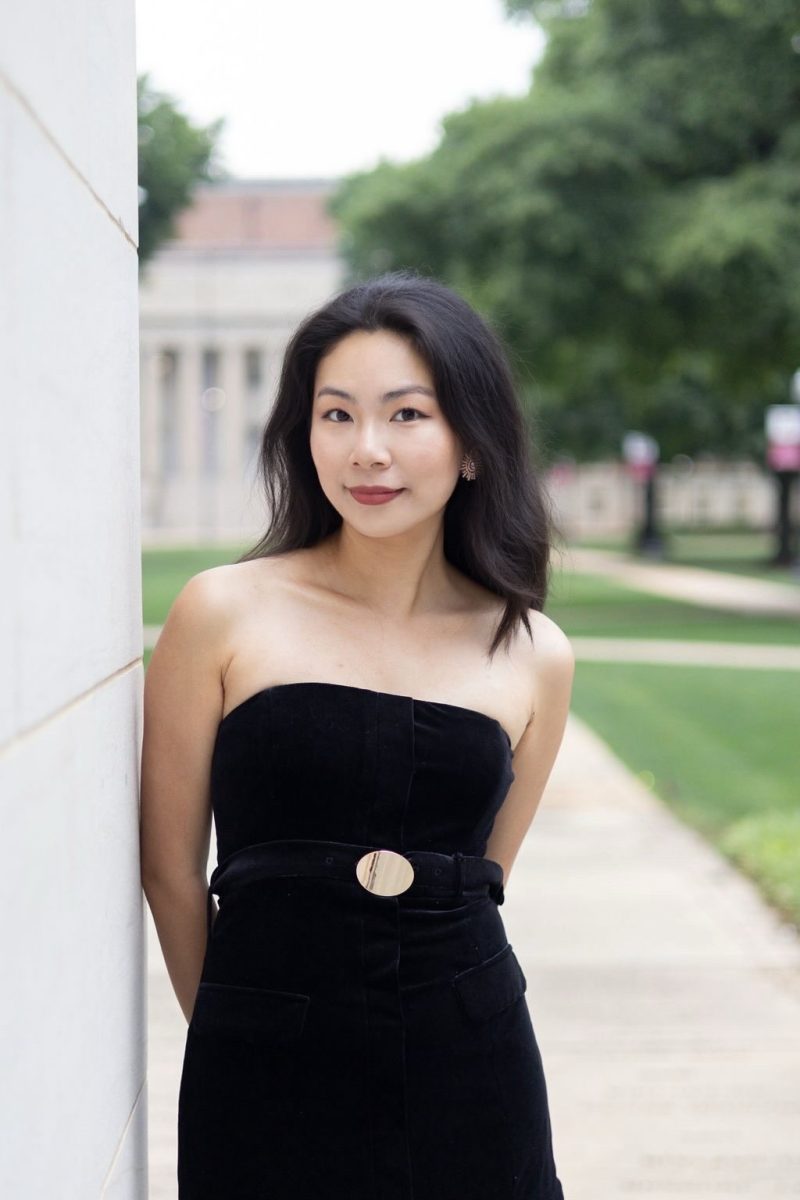
At 18 years old, Yongtong Tan moved from China to the United States in pursuit of her dream — becoming a professional pianist. 10 years later, Tan has accomplished that goal, earning her doctoral music degree in piano performance this past spring.
Tan is navigating a transitional period from music student to a professional musician, changing her day-to-day immensely. The structure of a student musician is balanced on a rigid, structured schedule, which is significantly different from the professional landscape.
“I think everything changed,” Tan said. “I’m doing choir camps right now, and I’m in a totally different atmosphere, because it’s not UA and nobody knows me.”
Throughout her time at UA, Tan has mainly accompanied opera productions and student vocalists. She said that it was challenging, but she felt the permission to turn down opportunities for a balanced schedule and that “time is money” in her newfound grueling career.
“I’m just a freshman in the work field. I have to be saying yes to a lot of things,” Tan said. “When you become a professional artist, you want to say yes most of the time. I think this is a huge transition for me, especially since everything is starting all over again.”
The life of a musician is bold, risky and full of adrenaline. After hours of practice, perfecting a measure and thinking it is perfect, there is still room for error during the performance. Tan said that her favorite part about performing is the adrenaline rush she experiences.
“As long as you’re prepared, then just be confident and enjoy the adrenaline,” Tan said. “Take risks every time and know that you’re not going to be ready if you don’t think you can do it.”
A highlight of her time at UA was performing in Atlanta this February for the Atlanta Community Symphony Orchestra. Tan was a featured soloist performing Gershwin’s “Rhapsody in Blue.”
“Everything turned out well, really well. Everyone loved it,” Tan said. “I had a wonderful, successful concert in Atlanta, so that is something that I really think is truly unforgettable.”
During her experience as a doctoral student, she learned how to have her own voice as a musician. She said that an artist should listen to teachers for guidance but break away to form individuality.
“If you don’t have your own voice, you’re just copying your teacher’s thoughts,” Tan said. “I realized that an appealing recital or an appealing concert is the player’s idea, and it’s so genuine.”
Tan said she dedicates her life to music because she does not think she could live without the adrenaline of performance. Although being a professional pianist can be demanding and tiresome, her true admiration for the arts as a performer and teacher is her reason to pursue her passion.
“I think it just makes my life more meaningful that I can deliver music to people and they enjoy it,” Tan said. “This is just a privilege for a musician to have — that people hear your voice, people understand you and appreciate your ability.”


