
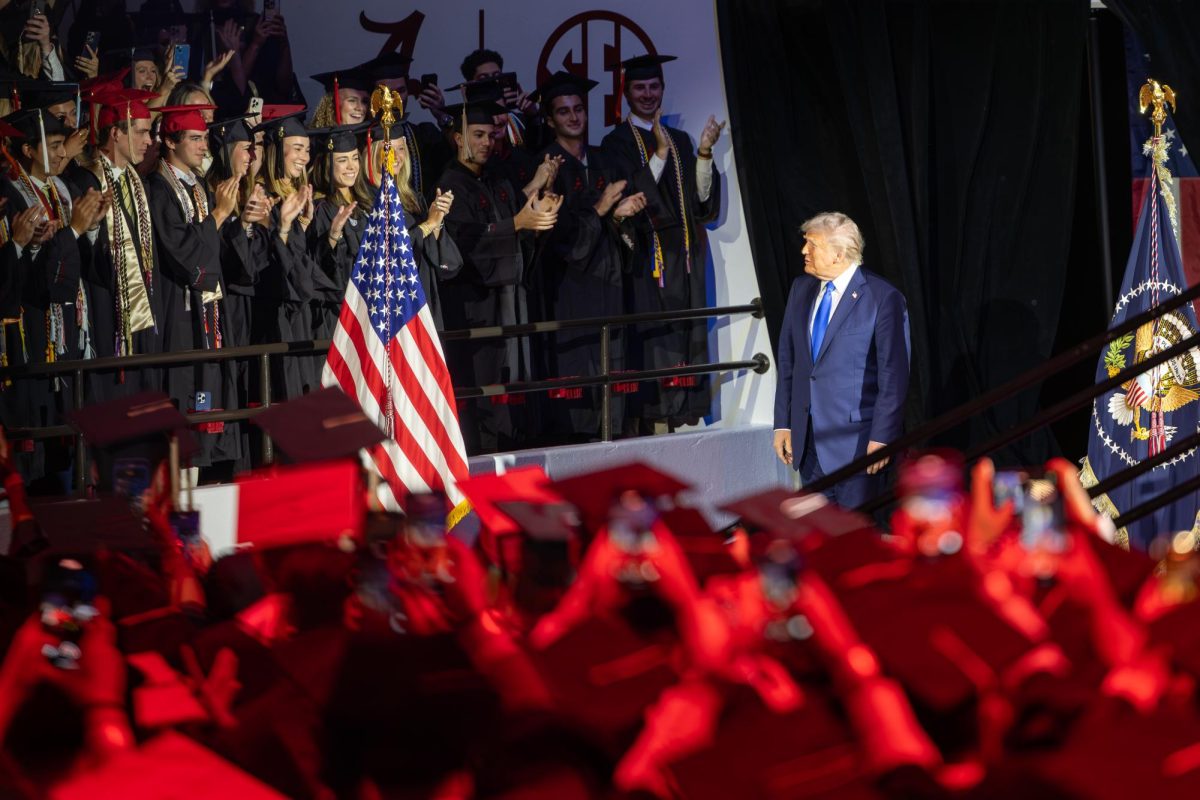
In an executive order issued on Friday, President Donald Trump outlined limits to college athlete eligibility and transfers; the name, image and likeness system; joining college sports after going pro; and more, threatening federal funding to institutions that don’t comply.
The order comes a month after Trump met with officials and representatives from college sports, including former Alabama head coach Nick Saban and SEC commissioner Greg Sankey, during a “Saving College Sports” roundtable to discuss the ongoing situation in college athletics.
“This chaotic state of affairs has undermined competition, reduced opportunities for student-athletes, and jeopardized support for the current range of college athletics,” said the order, titled “Urgent National Action to Save College Sports.”
The White House also said that uncontrolled spending on athletics could “jeopardize the financial well-being of universities” and therefore their contracts with the Department of War, Department of Health and National Science Foundation. Debts from athletics are already rocking several schools in the NIL era, including Florida State, which has accrued over $400 million in debt for its athletics program over five years.
The order is the second to address the issue following the “Saving College Sports” order signed last summer after another meeting between Trump and Saban.
In a statement issued after the first order’s signing, Alabama athletic director Greg Byrne said that “The University of Alabama applauds this executive order from President Trump to help ensure a long-term, sustainable model of intercollegiate athletics.” In a statement on Thursday, Byrne suggested that athletic programs that violate NIL rules be banned by conferences.
While not much came of the first executive order, officials from the state of Alabama have been among the most vocal figures asking for federal action. Representative Shomari Figures, D-AL, was part of a bipartisan coalition that introduced the SCORE Act, national legislation to set firm rules for NIL deals and student athlete compensation. Senator Tommy Tuberville, R-AL, although not in attendance at the Trump roundtable, used his platform and proximity to Trump on multiple occasions to support changes to the college athletics system. This March, Tuberville introduced the “Student-Athlete Act” in Congress, calling for a limit of one transfer with immediate eligibility and five years to play five consecutive seasons.
“I’m all for student-athletes making money, but we have to create some national guidelines, as the current system is broken,” Tuberville said.
Those requirements, including a limitation on professional athletes playing in college sports, are part of the new executive order, creating a contradiction between NCAA and court decisions allowing more transfers and extended eligibility. Under new guidelines, five players in the men’s Final Four would be ineligible to play, and Alabama basketball, having fielded former pro forward Charles Bediako earlier in the season, would have been in danger of federal scrutiny.
Still, the SEC and NCAA commissioners praised the order and its attempt to create uniform policies, calling on Congress to pass the SCORE Act further regulating college sports.
“The establishment and enforcement of consistent national standards for college athletics remains a top priority,” Sankey said in a statement. “President Trump’s executive order provides important clarity to help ensure all programs operate under comparable policies.”