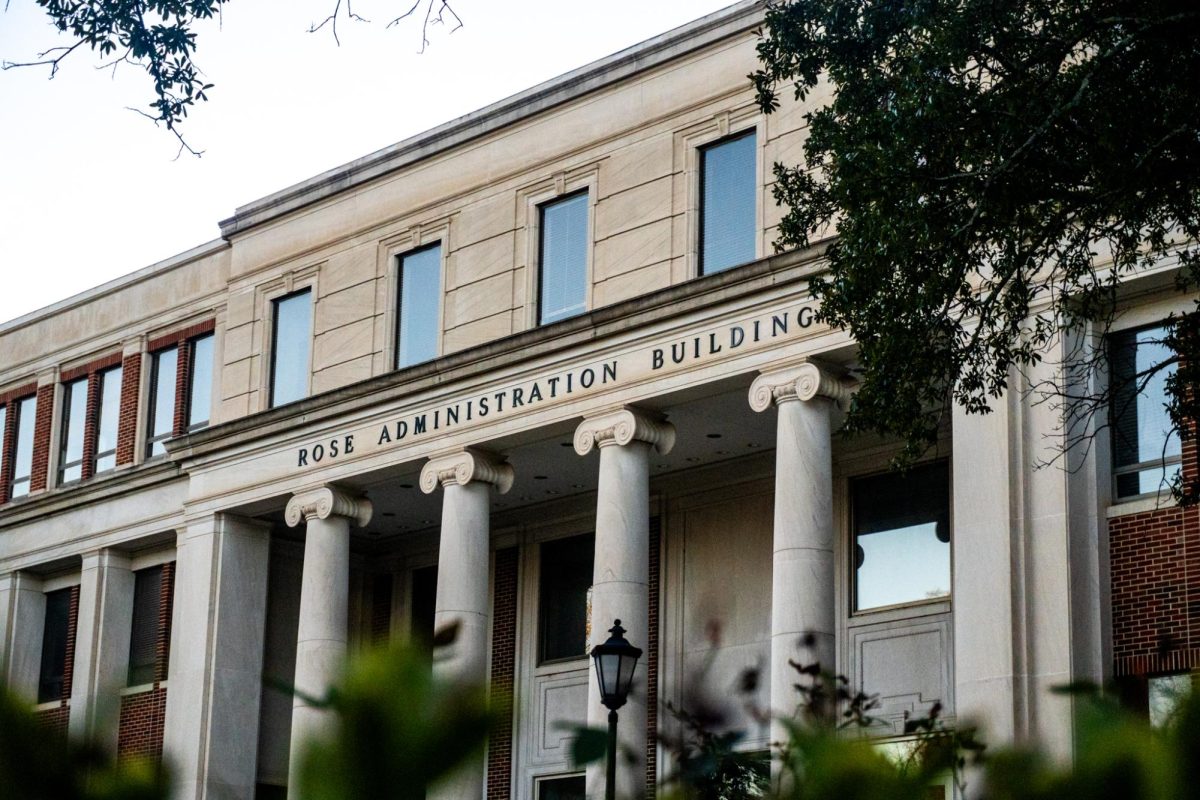


University of Alabama faculty members voiced concern over state House Bill 580, which they say could significantly alter higher education if enacted.
If enacted, HB580, would vest more power in governing boards and University administration, such as boards of trustees, over faculty tenure policies, course approval and faculty senates in four-year public institutions of higher education.
Rep. Troy Stubbs, a Republican representing state House District 31, sponsored the bill. It passed the House Ways and Means Education Committee and is scheduled for a full House vote March 31. If passed by the House, it would proceed to the Senate.
“HB580 would negatively impact higher education in Alabama. It would damage the university as an international brand, as an economic engine, and as an autonomous institution of higher learning,” the UA chapter of the American Association of University Professors said in a statement.
Under the bill, governing boards must produce policies regarding dismissal of tenured faculty and institute regular post-tenure reviews for faculty members. Boards would be required to approve any courses mandatory to obtain a degree and given explicit authority over the subject matter taught in any course.
HB580 would also significantly overhaul faculty senates in the state. Faculty Senates would be prohibited without governing boards’ imprimatur and would be explicitly advisory bodies. Unless boards decided otherwise, the number of senators would be capped at 60, with at least two senators representing each college or school. Appointed senators would be limited to six consecutive one-year terms.
Institutional presidents would also gain more control over senates. Presidents would appoint one representative from each college or school and be able to remove senators under certain conditions.
Stubbs cast his bill as a way to increase transparency and accountability in higher education in the state, though he said had no specific issues with a lack of transparency in the state’s schools.
“When you talk about things like Faculty Senate, tenure, the general public doesn’t always have a clear understanding of what those things are, and this bill helps to clarify the role of those specific items and provide that understanding for the public and that transparency and accountability,” Stubbs said. He pointed to similar laws in states like Texas, Florida and Ohio as inspiration for the bill.
Faculty members say the bill would threaten their academic freedom, the accreditation of programs, and faculty recruitment while weakening faculty senates.
Matthew Hudnall, an associate professor of management information systems and the president of the UA Faculty Senate, said he has a document with nearly 50 comments from faculty members concerned over the bill. He spoke with The Crimson White in a personal capacity, not on behalf of the Faculty Senate or University.
Hudnall said most of the feedback centered on concerns that academic programs may lose accreditation. The bill specifies that accreditation standards may not be used as a justification for violating any of its provisions, which include giving governing boards control over what is taught to students.
“If we put our accreditation at risk, we are putting our students and our programs at risk,” Hudnall said.
The UA AAUP said in a statement that HB580 “seeks to destroy academic freedom.”
Stubbs denied any risk to accreditation posed by his bill and said he believed academic freedom was important.
“We all view it as an egregious, lazy, copy-paste bill in search of a solution to a problem that doesn’t exist,” Sara McDaniel, a professor of special education and the president of the UA AAUP, said of HB580. The bill would bring about “more surveillance, more monitoring, more auditing and more fear,” she said.
The University already has a tenure dismissal policy outlined in the Faculty Handbook. New degree programs currently must receive Board of Trustees approval. And the University already conducts annual reviews of faculty members, though these are less intensive than the post-tenure reviews mandated by the bill, Hudnall said.
He pointed to Auburn University’s model as a better alternative than the universal reviews mandated by the bill. Auburn University switched in 2008 from a universal post-tenure review model to one where poor performance triggers a formal review. The provost’s website said that the universal process was “cumbersome, time consuming, expensive, and inefficient.”
“But there’s still issues with having a post-tenure review process, because that really becomes detrimental to the ability to attract faculty from other institutions and from other states,” Hudnall said, because the post-tenure review process is nuanced and external faculty may perceive Alabama as having removed tenure.
Faculty members also voiced concerns about major changes to how Faculty Senates would operate in the state, such as term limits and the appointment and possible termination of senators by the president. The bill would appear to abolish the current UA Faculty Senate until a new version is approved.
Hudnall said term limits would cause the body to lose institutional knowledge and function less efficiently. The AAUP statement called the proposition of the president appointing senators an “autocratic approach to governance.”
“It reads like, if you don’t go along with what the administration is saying, you just get removed and replaced by somebody who would go along,” McDaniel said of the bill.
Stubbs said HB580’s changes to faculty senates at public universities in the state will ensure greater cooperation between administrators and faculty and promote fresh ideas.
The UA System’s Office of External Affairs is working to collect feedback from UA System faculty members to pass along to legislators, Hudnall said. Part of this feedback could include a draft amended version of the bill produced in large part by AAUP faculty, he added.
“We are reviewing the legislation and engaging with leadership and faculty across our institutions, as well as with policymakers,” said Jessica Vickers, a UA System spokesperson. “Faculty are foundational to our mission and we remain committed to ensuring their perspectives are heard as the legislative process moves forward.”
Alex House, a UA spokesperson, provided a similar statement to The Crimson White.
“The faculty is the foundation of UA’s mission, and we remain committed to an environment where faculty voice is valued,” she said.
Stubbs said that though he did not receive feedback from institutions or faculty while drafting his bill, he is open to hearing from them and has since spoken to roughly ten people affiliated with different universities.
Stubbs said he appreciates faculty and their work. “This bill will improve and enhance the public universities’ image in the state among the taxpayers, and will ultimately improve the communication and camaraderie among faculty and administration at the universities,” he said.
McDaniel said legislators considering the bill should engage with faculty or administrators and review existing policies in faculty handbooks.
“We would all ask them to abandon this effort, because of the more broad harms that it’ll do to the state of Alabama, bringing us backwards, putting us into more of an isolated economy and state,” McDaniel said. “Allow administrators to do their jobs, a board of trustees to do their jobs, and faculty voices to be heard.”