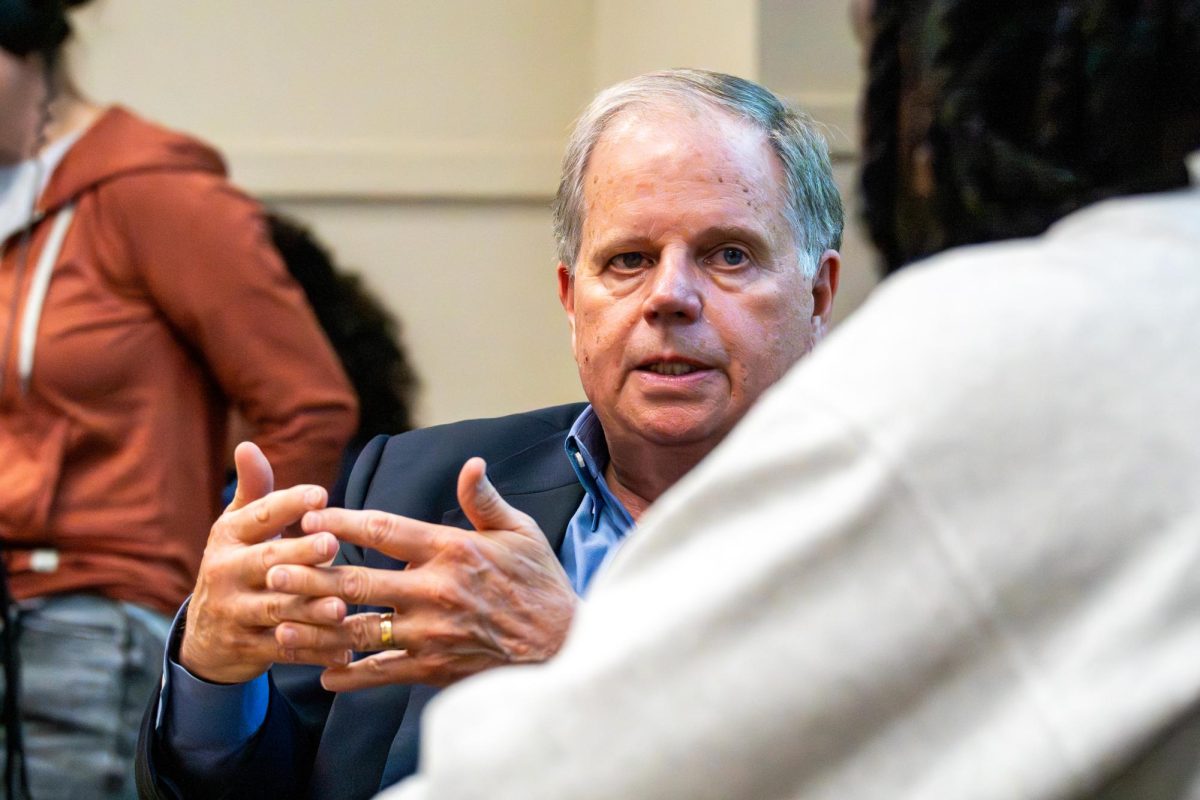



Reese Langdon is a junior majoring in political science and history. She is running as a write-in candidate for vice president of communications in the 2026 SGA election.
Q: Why are you running for vice president of communications?
A: I saw an opening, and I just wanted to take it. I’ve always loved student engagement and leadership, and this just was an open door for me to take. I’ve always been passionate about communications because I understand the ability that communications has to build relationships between people, between students and alumni and more, and that’s just something that I’m always been passionate about. And I’m excited to hopefully be able to take a leadership position guiding SGA through that.
Q: Why do you think you’re the best candidate for the position?
A: I think I’m the best candidate for the position because for the past three years I have shown that I’m a dedicated SGA member who enjoys going above and beyond to better the community around me, and also I have a high sense of what professional communication looks like and what building relationships through communication looks like. So I believe the combination of those skills makes me the best candidate.
Q: What are your campaign’s key platforms?
A: My key platforms are making the communications cabinet more concrete. It is a new cabinet, which allows for a lot of room to legitimize and better establish the cabinet within SGA. Also, building Alumni Relations is something that’s very important to me. I believe that alumni have a lot of wisdom and connections that are very beneficial for students. So I’m excited to hopefully have the opportunity to connect students with alumni better, and then also an overall enhancement of professionalism. That’s why I’m looking to expand things like the SGA LinkedIn, the SGA brand, things like that, to enhance our professionalism and relationships.
Q: What two specific initiatives do you want to accomplish and what time frames do you hope to accomplish them in?
A: So if I were to be elected, as soon as I was in the position, I would immediately begin streamlining cabinet positions and streamlining cabinet roles. This is something that, like I said, the cabinet is not fully developed yet, just because it’s so new. So I would ask the question of “how can the communications cabinet help SGA and help serve students,” and then through answering those questions, is how I’d be able to come up with cabinet roles. So that would happen immediately, yeah, and then something that I’m super excited about is the potential of the quarterly alumni newsletter. This is something that, once the ball started getting rolled in the fall, that’s something that I would want to begin enacting.
Q: How do you plan to adapt if your initial plan for achieving those goals doesn’t go how you hope?
A: I am no stranger to having to quickly adapt and to quickly problem solve. Just like any issue that I’ve run into in SGA, because they are inevitable, it’s just important to keep in mind why you’re there, why you’re serving and be able to quickly pivot.
Q: Your position this year is uncontested. Knowing this, how will student voters be able to hold you to campaign promises?
A: I think that if they look at my past experience within SGA, they would see that I’m a very dedicated member, no matter if somebody else is coming from my position or not. I’ve always been very dedicated to going above and beyond in whatever role that I’m serving, in the past three roles that I’ve served. So I think that my history within SGA would help them to be able to trust me.
Q: What experiences on campus do you think will help you in this role if you’re elected?
A: Capstone Journal, I’m the three year associate editor of the Capstone Journal, and through this position, I have been able to learn about clear communication as we write a lot of memos and a lot of rubrics back to the authors. So I’ve learned a lot about professional communication, very clear and efficient communication and also like building relationships.
Q: What is one last thing you want voters to know about you?
A: I want them to know that as communications, if I was able to be there like VP of Communications, then that they could always come to me and express whatever concern that they have of student government, that they can always kind of express that to me. VP communications is all about people and connecting people, and that I would always be an open book, and I would always have an open door for whatever students’ needs were that they wanted to communicate to me.
Q: With the write-in campaign. What was your timeline on that, and why did you decide to start later in the campaign week?
Honestly, just personal reasons is why it ended up being not the most traditional campaign run. I saw an open door, and that’s what inspired me to step up. I’d always had the desire and the want to step up, and then I think that that open door was really just my sign of encouraging me, you can do this, you can step up, use the skills that you have to serve, and I think that’s just got the ball rolling, and here we are.