
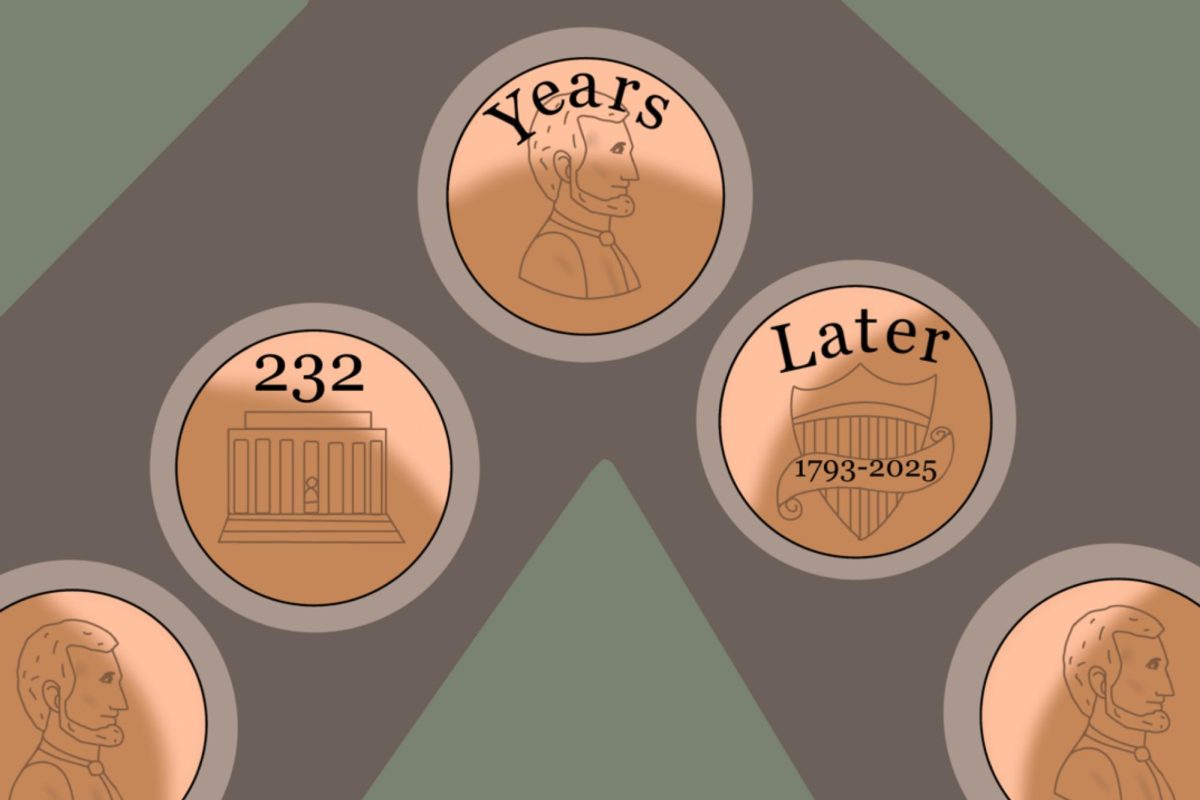
After 232 years, the United States Mint officially ended the production of the penny last Wednesday, America’s longest running coin, due to its production costs outweighing its value.
Hasan Isomitdinov, an instructor in the Department of Economics, Finance, and Legal Studies, said the decision comes down to a simple economic principle.
“Everything the government does has to have more benefit than it costs to society,” Isomitdinov said. “That’s the basic requirement for having a government. They have to weigh the benefits that it brings to society versus the cost it takes.”
Brayden Myers, president of the Economics Student Association, said he believes it was the right choice to stop producing the penny because of its cost and rare usage.
“The idea that our government is producing a coin that’s worth four times more than the value it represents, seems foolish to me,” Myers said. “I know people who throw away pennies because you just can’t use them, so I think it’s fine that we aren’t dedicating resources to it.”
According to the U.S. Mint, the cost of producing the penny has risen from 1.42 cents to 3.69 cents in the past decade.
“It takes certain metals, certain materials to mint each coin, so copper in this case, and overtime, the price of commodities rises,” Isomitdinov said. “Based on the numbers I know from this past year, it was costing the taxpayers about $80 million to print pennies worth about $30 million.”
Isomitdinov said most students and businesses won’t see significant disruptions, especially with most payments being digital.
“A lot of transactions happen digitally in this state of the economy, so only transactions that heavily involve cash might be impacted in terms of rounding,” he said.
The penny will remain a legal tender for now, as existing coins gradually withdraw from circulation.
“They can’t just say that it’s worthless from now on. A lot of people probably have some pennies in their houses that they have to be able to exchange and pay with,” Isomitdinov said. “The penny is a part of the history of the U.S. and many generations have a connection to it.”
Caleb Campbell, vice president of the ESA, said he agrees with the discontinuation of the penny but that people may fear getting rid of it.
“I think the argument against the discontinuation of the penny is that coins represent a very strong cultural legacy within the United States,” Campbell said. “There are ways we remember important people, important mottos and important images of our nation’s past.”
Isomitdinov said he believes the choice was clear.
“From a purely economic standpoint, the decision makes sense,” he said. “They served the society well and hopefully it saves money and gets redirected to something good by the government.”